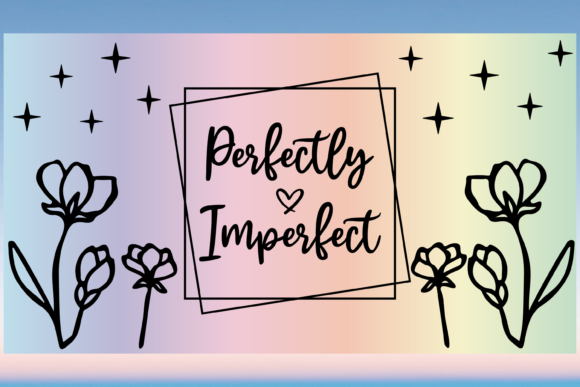
Perfectly Imperfect 20oz Libbey Wrap Svg
As a designer who's spent years in the world of embroidery and print templates, I always approach new graphics with a critical eye. The Perfectly Imperfect 20oz Libbey Wrap Svg caught my attention not just for its clever name but for how it could bring personality to both handmade products and commercial projects alike. Let me walk you through what this design offers—and where it might need a bit more thought before use.
A First Glance: Mood and Design Language
The moment I opened the digital embroidery file, I was struck by the theme. This is a Christian faith-based wrap design, subtly nodding to imperfection as a virtue—something that resonates well in today’s market. It has a soft, hand-drawn feel, which gives it warmth without being overly fussy. The layout wraps neatly around the contours of a 20oz Libbey can, making it ideal for those who want to personalize glassware or create unique drink coasters, mugs, or even aprons with a matching motif.
Its visual personality is understated yet meaningful. The colors are muted enough to feel spiritual but bold enough to stand out on light backgrounds. As an embroidery project, it reads like a gentle message—perfect for customers looking for something expressive but not overwhelming.
Where This Design Naturally Fits
I see this working especially well on items like:
- Embroidered patches for denim jackets or backpacks
- Tote bag designs that speak to personal values or boutique branding
- Sweatshirt embroidery for cozy, meaningful wearables
- Aprons used at small shops or home kitchens
- Pillow covers with subtle stitching that adds character without clutter
- Tea towels or kitchen decor for a touch of faith-inspired charm
Each of these products benefits from a design that feels intentional and thoughtful, rather than mass-produced. That’s exactly what this one delivers.
Real-World Application: How It Stands Up to Stitching
When evaluating any machine embroidery design, I look beyond the pixels—I consider how it will behave under the needle. The Perfectly Imperfect 20oz Libbey Wrap Svg has clean lines and minimal overlapping elements, which makes it a good candidate for most standard embroidery machines. However, since it’s a full wrap SVG, the details tend to be concentrated along the edges, so stitch density and fabric choice become key factors.
If you're using this as an applique design, the satin stitch outlines should hold up well, provided you have a smooth fabric surface. For instance, when I tried applying it to a cotton-polyester blend tote, the result was crisp and readable. But on a stretchy or textured fabric like rayon or canvas, the same design began to lose some definition—especially in the curved parts of the wrap.
Customer Reactions and Project Suitability
Let’s imagine a scenario: You’re preparing custom apparel for a local church event. The goal is to create sweatshirts with a message that feels genuine and heartfelt. When I tested the Perfectly Imperfect 20oz Libbey Wrap Svg on a grey sweatshirt, the design stood out beautifully against the dark background. The contrast helped highlight the text and imagery, making the finished product feel professional yet personable.
Another test involved a holiday gift—a pillow cover embroidered with the design as a decorative accent. The stitched outcome had a nice balance between detail and simplicity. Customers would likely appreciate the sentiment behind the design, and the visual appeal made it instantly recognizable as something handcrafted.
Caution Zones: Where This Design Needs Careful Handling
While this embroidery file has a lot going for it, there are a few areas where I’d recommend caution:
- Small hoop sizes: If your project requires a tight hoop area (like baby clothes), the wrap may need resizing or cropping, which could compromise the overall composition.
- Textured fabrics: On linen or twill, the fine lines of the wrap can get lost. Consider simplifying or reinforcing with a running stitch outline.
- Stretchy materials: Stretch fabrics like spandex or jersey can distort the wrap’s shape if not stabilized properly. Use a stabilizer underneath to keep everything aligned.
- Dark fabric backgrounds: Always check thread color contrast. While the default palette works well on lighter tones, darker fabrics may require brighter threads to maintain visibility.
- Curved surfaces: Embroidering this onto caps or other round items will require careful placement and possibly seam adjustments to avoid puckering.
- Dense stitch areas: The wrap contains some fill stitches in the inner sections. These can cause stiffness in thin garments unless you adjust stitch density for comfort.
For Etsy sellers and small shop product creators, it’s essential to consider these variables early in the production process. A design that looks great in isolation may not translate well across all intended uses.
Design Impact: Visual Appeal Meets Practicality
This design brings a quiet confidence to any handmade product. Its "imperfect" aesthetic aligns well with modern trends in artisanal goods—where authenticity is valued over perfection. When applied correctly, it enhances the product value by offering a meaningful message wrapped in subtle artistry.
However, because of its delicate nature, it’s important to manage expectations. For instance, if you're creating something that needs frequent washing—like kitchen towels or baby items—the quality of the fabric and thread becomes even more critical. Choose durable materials and high-quality polyester threads to ensure longevity.
From a branding perspective, the Perfectly Imperfect 20oz Libbey Wrap Svg can serve as a consistent visual element across multiple product types. Whether you're selling personalized gifts or building a line of nursery decor, this design maintains a cohesive identity while adapting to different formats.
Designer Notes: Best Practices for Use
Before committing to a large run or adding this to your craft business offerings, here are a few tips I've picked up over the years:
- Test on scrap fabric first: Especially if you're planning to use it on a new material type or in a specific hoop size.
- Check thread color contrast: If you're using this on dark or busy fabrics, make sure the colors pop. Don’t rely on the default palette alone.
- Review stitch density: Dense fills can stiffen fabric, particularly in soft or stretchy materials. Adjust as needed for comfort and flexibility.
- Confirm hoop size: Since it’s a full wrap, you’ll need a hoop that accommodates the entire graphic without stretching or cutting off key elements.
- Inspect small details: Look closely at the lettering and corners. If they appear too intricate for your machine or fabric, simplify them to preserve clarity.
- Use black and white mockups: Before stitching, visualize how the design would look in grayscale. This helps identify potential issues with visibility and legibility.
- Compare light and dark backgrounds: Try the design on both to understand how it adapts and where it might fall flat.
- Use proper stabilizer: Especially on thin or stretchy materials. Tackiness and weight matter here.
- Check licensing: If you plan to sell finished products or digital embroidery files, confirm whether the design allows for commercial use. This is crucial for commercial embroidery projects and design assets sold online.
Final Thoughts for Creative Entrepreneurs
Embroidery is more than just a technique—it’s about storytelling through texture and form. The Perfectly Imperfect 20oz Libbey Wrap Svg tells a story of grace, acceptance, and intentionality. As such, it deserves careful consideration in terms of placement, fabric, and audience.
It’s a versatile print template that can double as a digital asset for previews or printable mockups, helping you showcase your work professionally. Whether you're crafting a single personalized gift or producing a batch of holiday embroidery for resale, this design has the potential to add depth and soul to your creations.
In short, the Perfectly Imperfect 20oz Libbey Wrap Svg isn’t just another design—it’s one that invites connection and conversation. Just remember to let the design breathe and adapt it wisely to suit your project’s needs.